By Syvix / January 9, 2026
The dream of long-haul travel has evolved. Gone are the days when simply having a seat that reclined a few inches was considered a luxury. Today, the discerning traveler embarking on journeys of eight hours or more expects an experience that transcends mere transportation. They seek an airborne sanctuary, a personal haven where the stresses of travel melt away, and the promise of a truly restorative sleep is not just a marketing slogan but a tangible reality. This is the essence of sleeping like it’s a hotel suite in long-haul business and first class – choosing cabins and details that let you arrive feeling as if you left a quiet room, not an overlit aisle seat.
As airlines race to innovate, adding sliding doors, plush bedding, and meticulously engineered quiet cabins, the chasm between older premium products and the new “suite-style” seats has become vast. This gap is now significant enough to fundamentally define the entire trip, dictating whether you land refreshed and ready to seize the day, or exhausted and in desperate need of recovery. This comprehensive guide will delve into the intricacies of these modern marvels, equipping you with the knowledge to select not just a flight, but a truly transformative travel experience.
Why the Right Cabin Matters More Now Than Ever Before
The ability to get real, uninterrupted sleep on an overnight flight of seven hours or more has transitioned from a pleasant bonus to the single most valuable onboard amenity. The physiological impact of sleep deprivation is well-documented: impaired cognitive function, reduced immune response, increased irritability, and a general feeling of malaise. For business travelers, this can mean a less effective first day of meetings. For leisure travelers, it can mean sacrificing precious vacation time to recuperate. A true lie-flat bed, a quiet and private environment, and thoughtful service timing can mean landing ready to enjoy a first evening or dive straight into work, instead of needing a recovery day.
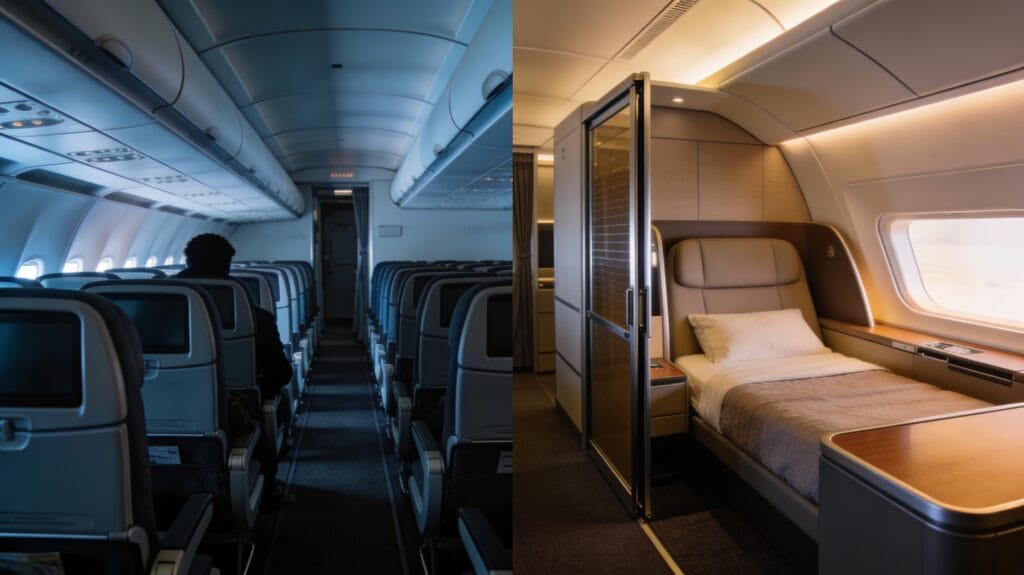
The landscape of premium travel has shifted dramatically. Modern business-class seats often match or even surpass older first-class products when it comes to bed length, storage, and, crucially, privacy. This makes meticulous seat selection far more important than relying solely on the cabin label. What was once the pinnacle of luxury, a first-class recliner or angled-flat seat from a decade ago, pales in comparison to the fully enclosed, horizontal beds now available in many business-class cabins. Airlines are no longer just selling a seat; they are selling a micro-environment, a personalized space designed for peak performance and ultimate relaxation.
The Evolution of Premium Air Travel
To understand why the “right cabin” is so critical today, it helps to glance back at the trajectory of premium air travel:
- The Early Days of Luxury: In the golden age of air travel, first class was defined by spacious recliners, gourmet meals served on china, and impeccable service. While luxurious for its time, actual sleep on long flights was often compromised by the non-flat nature of the seats.
- The Advent of Lie-Flat: The late 1990s and early 2000s saw the introduction of lie-flat seats, initially in first class, then gradually appearing in business class. These were revolutionary, allowing passengers to stretch out horizontally. However, many were “angled-flat,” meaning they sloped slightly, causing passengers to slide down during sleep.
- True Horizontal Beds: The mid-2000s brought true horizontal lie-flat beds, first in first class, then quickly adopted by leading business class cabins. This was a game-changer, but privacy was still limited, often with open-plan layouts or staggered configurations.
- The Suite Revolution: The current era, beginning in the late 2010s, is defined by the “suite” – individual pods with high walls and, most notably, sliding doors. These are no longer just seats; they are private rooms in the sky, offering an unprecedented level of personal space and seclusion.
This rapid evolution means that a flight booked today could offer anything from a dated angled-flat seat to a cutting-edge private suite. The difference in experience is monumental, directly impacting your well-being upon arrival.
Suites, Doors, and Seat Layouts: The Architecture of Airborne Comfort
The newest generation of business and first-class cabins is built around the concept of the “suite.” These are individual pods with high walls, often extending well above eye level, and crucially, sliding doors that completely enclose your personal space. Each suite typically offers direct aisle access, eliminating the need to clamber over a sleeping neighbor. This layout is a game-changer for privacy, shielding you from foot traffic, the glare of the galley lights, and the general hubbub of the cabin. It transforms the act of changing into loungewear or sleepwear from an awkward public display into a comfortable, private ritual.
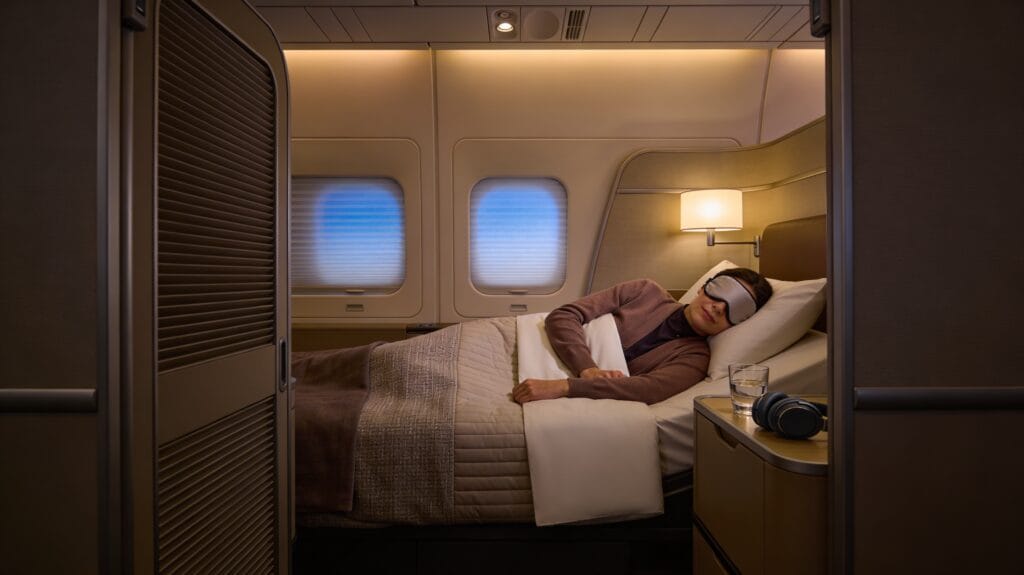
When evaluating routes, checking whether a flight utilizes these updated suite products versus an older 2-2-2 or 1-2-1 open layout is one of the most important decisions you can make. The difference isn’t just aesthetic; it’s fundamental to your ability to relax and sleep deeply.
The Genesis of the Suite Concept
The idea of a private space in the sky isn’t entirely new; some older first-class cabins offered partitions. However, the modern suite, as we know it, emerged from a combination of technological advancements, passenger demand for greater privacy, and intense airline competition. Airlines like Emirates, Etihad, and Qatar Airways pioneered the concept, pushing the boundaries of what was possible within an aircraft fuselage. Their innovations quickly became the benchmark, forcing other carriers to adapt or risk falling behind. These suites are not merely seats; they are meticulously designed micro-environments, often the result of collaborations with industrial designers and luxury interior firms.
Decoding Seat Layouts: From Open Plans to Private Pods
Understanding seat layouts is crucial for deciphering the level of privacy and comfort you can expect.
- 2-2-2 or 2-3-2: Typically found in older business class cabins, these layouts mean passengers in window or middle seats need to step over their neighbor to access the aisle. Privacy is minimal, and the sleeping experience can be frequently interrupted.
- 1-2-1 (Open Staggered or Herringbone): This was the first generation of direct aisle access for every passenger. While a significant improvement, these seats often lack high walls and doors. “Staggered” layouts can mean your feet go into a cubby under the seat in front, which can feel restrictive. “Herringbone” (or reverse herringbone) seats angle passengers away from the aisle, offering more perceived privacy but still open to the cabin.
- 1-1-1 or 1-2-1 (Suite with Doors): This is the gold standard. Whether it’s a true 1-1-1 configuration in First Class (like Emirates) or a highly refined 1-2-1 in Business Class (like Qatar Qsuite or ANA The Room), the key is the enclosing walls and sliding door. These layouts maximize personal space and seclusion.
The Psychology of the Door: Privacy and Psychological Comfort
The sliding door is arguably the single most impactful feature of the modern suite. Beyond the obvious physical barrier, it provides immense psychological comfort.
- Visual Privacy: You are shielded from prying eyes, cabin activity, and the glare of passing service carts. This allows you to truly disengage from the public environment of the aircraft.
- Auditory Comfort: While not soundproof, the high walls and door offer a degree of acoustic dampening, reducing ambient cabin noise and making it easier to relax or sleep without distraction.
- Sense of Control: Having a door to close gives you a sense of control over your personal space, a rare commodity in a shared environment like an airplane. You decide when to engage with the outside world and when to retreat.
- Enhanced Security: While subtle, the enclosed space can also contribute to a feeling of greater personal security for your belongings, even if only psychologically.
This enhanced privacy makes it easier to change into sleepwear, stretch, or simply exist in your own bubble without feeling on display.
Beyond the Door: Dimensions and Ergonomics
Within those suites, the minutiae of design and functionality matter immensely.
- Bed Length and Width: Seats that convert into longer, wider beds with truly level sleeping surfaces and minimal gaps between cushions will feel closer to a hotel mattress. Some airlines offer beds over 80 inches long, accommodating even very tall passengers. Width is equally important, allowing for natural movement during sleep without feeling constrained. Look for products where the footwell is spacious and doesn’t taper too severely.
- Level Sleeping Surface: Many older lie-flat seats still have slight variations in height or firmness across their length, creating uncomfortable pressure points. The best modern suites offer a consistently flat and supportive sleeping platform.
- Storage Solutions: Thoughtful storage is key to maintaining a tidy and functional space.
- Within Arm’s Reach: Dedicated spots for phones, glasses, a water bottle, and headphones prevent midnight contortions to reach overhead bins.
- Secure Compartments: Lockable or enclosed compartments for valuables offer peace of mind.
- Shoe Storage: Many suites include a small cubby for shoes, preventing them from becoming a trip hazard or cluttering the floor.
- Laptop/Tablet Stowage: Easily accessible spaces for electronic devices, often with integrated charging ports.
- Personal Controls: Intuitive controls for seat recline, lighting, and entertainment are crucial. The best systems are easy to operate even in the dark or when half-asleep.
- Power Outlets and USB Ports: Abundant and easily accessible power options are a given in modern suites, allowing you to charge multiple devices simultaneously.
Window vs. Aisle Suites: Pros and Cons
Even within a suite cabin, the choice between a window and an aisle seat can influence your experience.
- Window Suites: Offer stunning views (especially on daytime flights), a greater sense of enclosure against the fuselage, and often a slightly more isolated feel. However, you might be further from the galley or lavatories.
- Aisle Suites: Provide quicker access to the aisle, lavatories, and crew. Some passengers find them less claustrophobic. However, you might experience more light spill from the aisle or occasional bumps from passing crew members, even with a closed door.
For optimal sleep, a window suite often provides the most cocoon-like environment, especially if the window can be fully darkened.
Specific Examples of Leading Suites
- Emirates First Class (A380): Famous for its fully enclosed, gilded suites, onboard shower spas, and dedicated bar. The ultimate in ostentatious luxury and privacy.
- Qatar Airways Qsuite (A350/777): Often heralded as the “first class of business class,” the Qsuite features sliding doors, customizable privacy panels, and the revolutionary ability to combine adjacent seats into a double bed or a quad-facing social space.
- ANA The Room (777-300ER): Inspired by traditional Japanese living spaces, “The Room” offers an incredibly wide seat (with a full-size mattress topper) and a sliding door, creating a truly spacious and private environment.
- Singapore Airlines Suites (A380): While not all feature sliding doors as prominently as others, their First Class Suites are legendary for their size, separate bed and seat, and opulent finishes.
Understanding these examples helps to set a benchmark for what to look for when researching your own flights.
The Art of Sleep: Bedding, Lighting, and Noise Control
Once you’ve secured a suite with robust dimensions and thoughtful design, the next layer of luxury unfolds in the details that directly impact your sleep quality: bedding, cabin lighting, and noise mitigation. Airlines now differentiate themselves with bedding almost as much as with the seat itself, recognizing that a truly comfortable bed is paramount to a hotel-like experience.

The Bedding Revolution: From Thin Blankets to Plush Duvets
The days of thin, scratchy airline blankets and small, lumpy cushions are, thankfully, largely behind us in premium cabins. Look for carriers that offer:
- Mattress Toppers: These are perhaps the most significant bedding upgrade. A quality mattress topper smooths out seat contours, adds a crucial layer of cushioning, and provides a more consistent sleeping surface. They can range from thin memory foam pads to substantial, plush toppers that genuinely mimic a hotel mattress. The material (memory foam, down alternative, synthetic) and thickness vary, directly impacting comfort.
- Full-Size Duvets: Properly sized duvets, often made of down or high-quality synthetic alternatives, allow you to regulate your temperature effectively and feel truly enveloped. They are a world away from the small, restrictive blankets of yesteryear. Some airlines even offer different duvet weights depending on cabin temperature or passenger preference.
- Proper Pillows: Instead of one small, unsupportive cushion, the best airlines provide full-size, plush pillows. Some carriers offer a choice of pillow firmness or even additional pillows on request, allowing you to customize your head and neck support. Luxury brand partnerships (e.g., with hotel chains or bedding companies) are becoming common, further enhancing the quality.
These upgrades are not just about luxury; they actively work to smooth out seat contours, provide proper support, and help regulate body temperature, all critical factors for deep, restorative sleep.
Mastering the Ambiance: Circadian Lighting Systems
Cabin lighting and noise significantly shape your ability to fall and stay asleep. Modern LED lighting systems are no longer just about illumination; they are sophisticated tools designed to support your natural circadian rhythm.
- Gradual Dimming and Warmer Tones: During meal service and pre-sleep phases, these systems use gradual dimming and warmer color temperatures (more orange/red light) that mimic sunset. This helps to signal to your body that it’s time to wind down and encourages melatonin production.
- Transition to Very Low, Cool Light: As the cabin settles for the night, the lighting transitions to very low, cool light (blue/green spectrum, which can suppress melatonin) or near darkness, minimizing sleep disturbance.
- Pre-Landing Wake-Up: Before landing, the lighting gradually brightens and shifts to cooler, more energizing tones, helping to gently rouse passengers and prepare them for arrival, mitigating jet lag.
- Individual Reading Lights: Beyond the main cabin lighting, powerful yet unobtrusive individual reading lights are essential. The best ones offer adjustable brightness and direction, allowing you to read without disturbing others.
- “Do Not Disturb” Indicators: Some suites feature discreet electronic “do not disturb” signs, often integrated with the lighting system, allowing you to signal to the crew that you wish to remain undisturbed.
The Silence Factor: Noise Mitigation in the Sky
Even a perfect lie-flat bed can feel tiring if the cabin is relentlessly noisy. Constant engine roar, chatter, or service announcements can prevent you from reaching deep sleep cycles.
- Aircraft Design and Insulation: Newer aircraft like the Boeing 787 Dreamliner and Airbus A350 are engineered with better insulation, advanced aerodynamics, and quieter engines, significantly reducing cabin noise compared to older models. Engine placement (e.g., further back on the fuselage) also plays a role.
- Active Noise Cancellation: Many premium cabins provide high-quality, over-ear noise-canceling headphones. These are invaluable for blocking out engine hum and ambient cabin noise, allowing you to enjoy entertainment or simply revel in silence.
- Cabin Acoustics and Materials: The materials used in cabin construction (carpeting, wall panels, seat fabrics) are chosen not just for aesthetics but also for their sound-absorbing properties, contributing to a quieter environment.
- Crew Awareness: Well-trained cabin crew understand the importance of a quiet cabin during rest periods, conducting their duties discreetly and minimizing loud conversations.
- Personal Noise Blockers: While airlines provide headphones, bringing your own high-quality earplugs or a compact white noise machine can further enhance your personal quiet zone.
Personal Comfort Controls: Temperature and Airflow
Beyond the collective cabin environment, individual controls allow you to fine-tune your personal microclimate.
- Individual Air Vents: The ability to control airflow directly at your seat is vital for some passengers who prefer cooler temperatures or more air circulation.
- Temperature Controls (Limited): While full individual temperature control is rare, some first-class suites offer limited ability to adjust the warmth of your immediate area.
- Seat Massage Functions: A subtle seat massage function can be a wonderful way to relax muscles before sleep or alleviate stiffness during the flight.
These small touches, when combined, transform the quality of rest from mere horizontal lying to genuine, restorative sleep.
Seamless Service and Strategic Dining: Optimizing Your Rest
Even with the most luxurious seat and bedding, poorly timed service can disrupt your sleep and diminish the value of a premium cabin. Modern airlines understand this, and many now offer flexible service options designed to prioritize passenger rest.
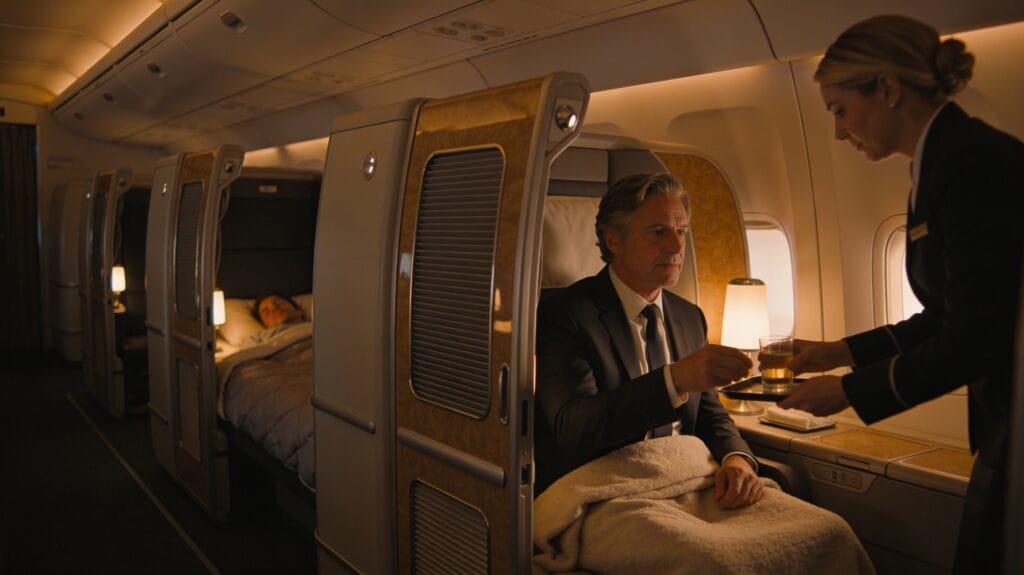
The Philosophy of Dine-on-Demand: Freedom and Flexibility
One of the most significant advancements in premium cabin service is the “dine-on-demand” concept. Instead of rigid meal service times, dine-on-demand allows you to eat when you want, not when the airline dictates. This is particularly ideal on late-night departures or shorter overnight flights where maximizing sleep is paramount.
- Eat in the Lounge, Sleep on Board: A smart strategy for overnight flights is to enjoy a full meal in the airline’s premium lounge before boarding. Once airborne, you can settle straight into your suite, change into sleepwear, and go to sleep immediately, bypassing the onboard meal service entirely.
- Quick Meal Options: For those who prefer to eat on board but want to maximize sleep, many airlines offer “express” or “quick meal” options – lighter fare served efficiently so you can get to sleep faster.
- Snack Availability: Throughout the flight, snacks and lighter bites are usually available on request, ensuring you don’t go hungry if you wake up.
This flexibility allows you to align your eating schedule with your body clock, rather than the flight schedule, which is crucial for minimizing jet lag and optimizing sleep.
Crafting Your Pre-Sleep Ritual
Just as you would at a hotel, developing a pre-sleep ritual on a long-haul flight can signal to your body that it’s time to wind down.
- Hydration: Drink plenty of water before and during the flight, but avoid excessive liquids close to bedtime to minimize lavatory trips.
- Avoid Stimulants: Steer clear of caffeine and alcohol several hours before you intend to sleep. While alcohol might initially make you feel drowsy, it disrupts sleep quality.
- Light Reading/Relaxation: Engage in a calming activity like reading a book or listening to soothing music rather than screen time, which can interfere with melatonin production.
- Amenity Kit Utilization: Use the amenities provided in your kit – a refreshing facial mist, lip balm, eye mask, and earplugs can all contribute to creating a more comfortable sleep environment.
Communicating Your Sleep Preferences: The Crew is Your Ally
Even the most intuitive service system benefits from clear communication. Decide in advance whether the flight is primarily for sleep, work, or a combination, and clearly communicate your preference to the cabin crew.
- “Do Not Disturb” Requests: Explicitly ask to be woken only for specific services (e.g., breakfast before landing) or, if you truly want uninterrupted rest, not at all. Many airlines provide “do not disturb” stickers or electronic indicators for your suite.
- Meal Timing: If you do plan to eat on board, specify your preferred meal timing when the crew takes orders.
- Wake-Up Calls: Requesting a wake-up call at a specific time (e.g., 90 minutes before landing for breakfast) ensures you don’t miss out on desired services but still get maximum rest.
A well-briefed crew can become your greatest ally in achieving a restful flight, anticipating your needs discreetly and ensuring minimal interruptions.
Hydration and Amenities for Sleep
Beyond the core bedding and food, the smaller details in amenity kits and cabin service contribute to a comfortable sleep.
- Water Bottles: Many airlines provide a bottled water in your suite, allowing for easy hydration throughout the night without calling a crew member.
- Sleep Masks and Earplugs: High-quality versions are often included in amenity kits. While your suite offers privacy, an eye mask can block out residual light, and earplugs can further reduce noise.
- Skincare and Aromatherapy: Amenity kits often contain hydrating lotions, facial mists, and sometimes even aromatherapy balms designed to promote relaxation. Utilizing these can be part of your pre-sleep ritual.
- Comfort Wear: In First Class, and increasingly in Business Class, airlines provide comfortable pajamas or loungewear. Changing into these signals to your body it’s time for rest and enhances the feeling of being in a private “room.”
The Role of the Cabin Crew: Anticipating Needs and Discreet Service
The human element remains crucial. The best cabin crews in premium cabins are highly trained to provide impeccable yet unobtrusive service. They understand the rhythm of a long-haul flight and the importance of allowing passengers to rest.
- Proactive Service: Anticipating needs (e.g., refilling a water glass when you’re awake, offering a warm towel upon waking).
- Discreet Presence: Moving quietly, speaking softly, and minimizing disruptions during rest periods.
- Personalized Attention: Remembering your preferences from previous interactions and tailoring service accordingly.
When all these elements – flexible dining, a personal sleep strategy, and attentive crew – align, the journey becomes an integral part of the destination, not just a means to get there.
Navigating the Skies: Choosing Your Airborne Sanctuary
The same meticulous care that goes into picking a hotel for your destination should go into selecting your long-haul flight. It’s no longer enough to simply pick an airline and a departure time. To truly experience the “hotel suite in the sky,” you must become an informed consumer, delving into the specifics of aircraft types and seat maps on your chosen routes.
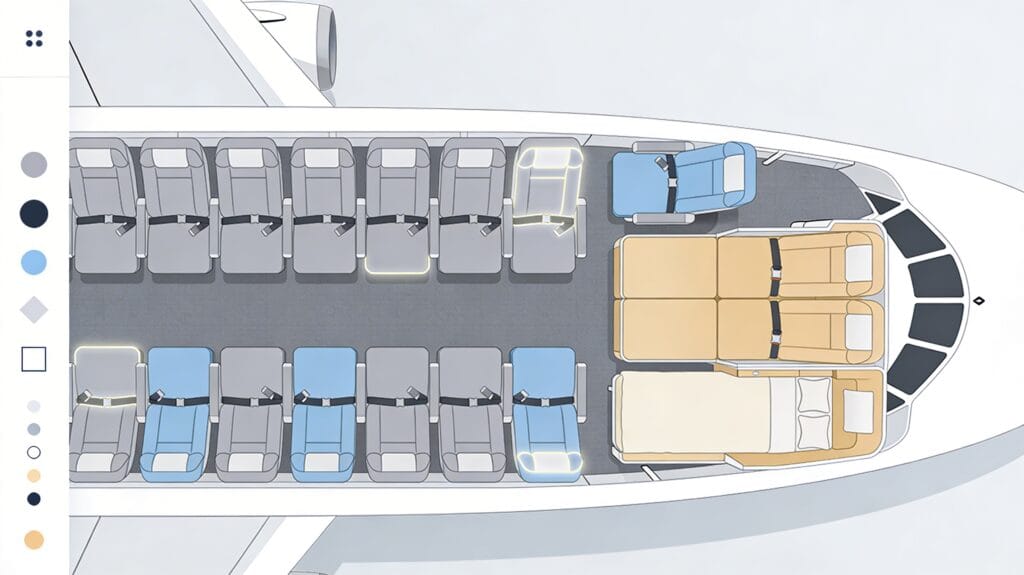
Prioritize flights with the latest suites and consistent, high-quality bedding, even if they depart an hour earlier or later. The qualitative difference in sleep often far outweighs minor tweaks in timing.
Researching Aircraft Types and Seat Maps: Your Essential Tools
This is where the real detective work begins. Airlines often operate both older and newer cabins on the same city pair, or even on different flights on the same day.
- Airline Websites: Start with the airline’s official website. Look for detailed descriptions of their business and first-class products, often categorized by aircraft type. Pay close attention to language like “new generation,” “suite,” “door,” or specific product names (e.g., “Qsuite,” “Apex Suite,” “The Room”).
- Seat Maps (Crucial!): Once you’ve identified a flight, immediately check its seat map. Tools like SeatGuru.com, ExpertFlyer.com, and even the airline’s own booking interface are invaluable.
- Identify the Layout: Look for 1-2-1 configurations that clearly show individual pods or suites. Avoid 2-2-2 or 2-3-2 if sleep and privacy are your priorities.
- Locate Doors: Some seat maps explicitly indicate doors. If not, look for high walls around each seat.
- Footwells and Dimensions: While not always shown on basic seat maps, reviews and photos can reveal if footwells are restrictive or spacious.
- Galley/Lavatory Proximity: Avoid seats directly next to galleys or lavatories, as these are high-traffic, potentially noisy areas. Bulkhead seats can offer more legroom but sometimes have smaller footwells for the bed.
- Expert Reviews and Travel Blogs: Consult sites like One Mile at a Time, The Points Guy, Executive Traveller, or Australian Business Traveller. These sites often provide detailed, hands-on reviews of specific airline products on particular aircraft, complete with photos and videos. They can highlight nuances that aren’t obvious from official descriptions.
- YouTube Walkthroughs: A quick YouTube search for “[Airline Name] Business Class [Aircraft Type]” can yield video walkthroughs, giving you a virtual tour of the cabin and a realistic sense of the space.
The Aircraft Matters: Newer vs. Older Generations
The type of aircraft plays a significant role in your overall experience, beyond just the seat.
- Boeing 787 Dreamliner & Airbus A350: These newer generation aircraft are designed with passenger comfort in mind. They feature:
- Quieter Cabins: Better insulation and engine design reduce noise.
- Lower Cabin Altitude: Pressurized to a lower “altitude” (around 6,000 feet instead of 8,000), which can reduce fatigue and dehydration.
- Higher Humidity: More humid cabin air helps prevent dry eyes, skin, and respiratory discomfort.
- Larger Windows: With electronic dimmers instead of shades, allowing for controlled natural light.
- Advanced LED Lighting: As discussed, these systems support circadian rhythms.
- Older Aircraft (e.g., Boeing 747, older 777s, A330s): While some have been retrofitted with excellent premium cabins, many still feature older technology, higher noise levels, and less advanced cabin environments. Always verify the specific cabin configuration, not just the aircraft type.
Airline Consistency vs. Variation: The Retrofit Lottery
Airlines rarely retrofit their entire long-haul fleet simultaneously. This means:
- Route Variation: An airline might operate its newest suites on its flagship routes (e.g., London to New York) but older products on secondary routes or flights with less premium demand.
- Fleet Mix: An airline might have a mix of new and old aircraft, or new cabins on one aircraft type (e.g., A350) but older cabins on another (e.g., 777).
- “Cabin Lottery”: Sometimes, even after meticulous research, an aircraft swap can occur due to operational reasons, leading to a different cabin product than expected. While frustrating, this is a risk inherent in air travel. However, thorough research significantly reduces the odds.
Booking Strategies for the Best Suites
- Book Early: The best seats (e.g., true window suites, those furthest from galleys) are often booked first.
- Use Points/Miles Wisely: If using loyalty points, research which airlines offer the best suite products for redemptions. Qatar Qsuite on points is a highly sought-after redemption.
- Set Seat Alerts: Tools like ExpertFlyer can alert you if a specific seat (or even a specific type of seat, like a “throne seat”) becomes available.
- Consider Upgrades: If flying economy or premium economy, research upgrade possibilities to business or first class, especially if you have status or points.
The Value Proposition: Cost vs. Comfort
Deciding to invest in a suite-style business or first-class product is a personal choice.
- When It’s Worth It: For critical business meetings, special occasion trips (honeymoons, milestone birthdays), or simply when you value arriving truly refreshed, the investment can be transformative. The ability to hit the ground running, avoid a recovery day, and maximize your time at the destination often justifies the cost.
- Finding Deals: Look for sales, use credit card points strategically, or leverage airline loyalty programs to make these experiences more accessible.
- The “Splurge” Factor: For many, it’s about making the journey itself part of the luxury experience, extending the vacation or business trip from door to door.
By adopting a proactive and informed approach to flight selection, you transform the booking process from a chore into an exciting quest for the ultimate airborne sanctuary.
The Future of Flight: What’s Next for Premium Cabins?
The relentless pursuit of the perfect passenger experience means premium cabins are continuously evolving. What might seem cutting-edge today could be standard tomorrow, as airlines push boundaries in comfort, technology, and personalization. The future promises an even deeper integration of wellness, hyper-personalization, and sustainable luxury.
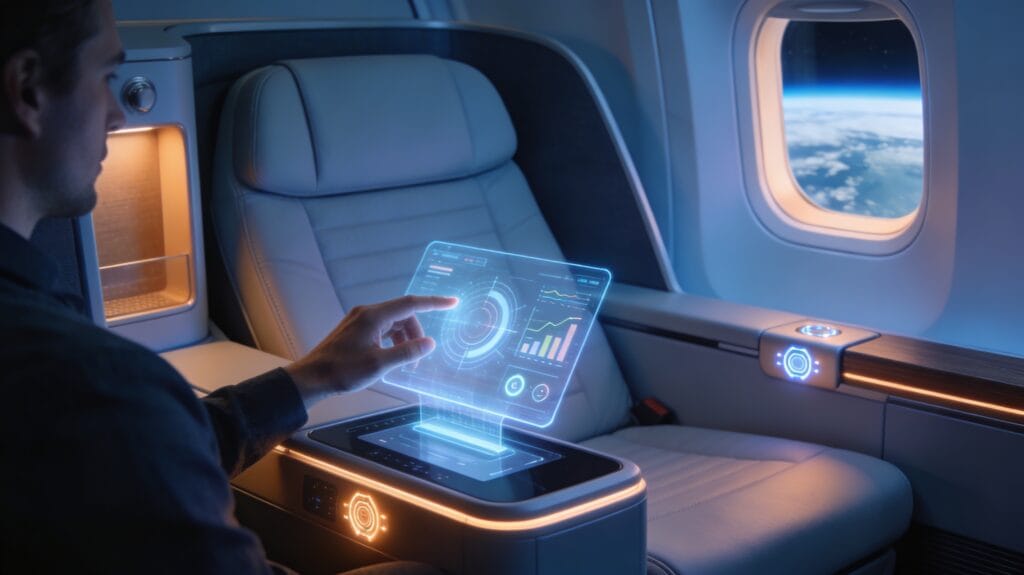
Hyper-Personalization: AI-Driven Comfort
Imagine a cabin that knows your preferences before you even board.
- AI-Driven Preferences: Future systems might leverage AI to recall your preferred seat firmness, lighting color, ambient temperature, and even meal choices from previous flights, automatically setting your suite to your ideal specifications upon boarding.
- Biometric Integration: Wearable tech or embedded sensors could monitor your heart rate, sleep patterns, and stress levels, subtly adjusting cabin conditions (lighting, temperature, even aromatherapy diffusers) to optimize your rest and well-being.
- Customizable Entertainment: Beyond a vast library, entertainment systems could learn your tastes and proactively suggest content, or even offer personalized guided meditations tailored to the flight’s duration and time zone.
 Save more: No Hotels.com cancellation fees on bookings.
Enhanced Wellness Features: Beyond the Basics
The focus on holistic well-being will intensify.
- Advanced Humidification and Air Quality: While newer aircraft are better, future cabins might feature even more sophisticated air purification systems and individualized humidity controls to combat dryness and improve respiratory comfort.
- Virtual Reality for Relaxation and Exploration: VR headsets could offer immersive experiences for relaxation (e.g., virtual nature walks, guided mindfulness sessions) or even “pre-explore” your destination, enhancing anticipation without screen fatigue.
- Ergonomic and Posture Support: Seats might incorporate dynamic features that automatically adjust to support optimal posture, reducing muscle fatigue and promoting better circulation during long periods of sitting.
- Integrated Light Therapy: Beyond circadian lighting, specific light therapy programs could be offered to help passengers adjust to new time zones more quickly or boost mood.
Sustainable Luxury: Conscience and Comfort
As environmental awareness grows, sustainable practices will become an integral part of luxury travel.
- Eco-Friendly Materials: Expect to see more recycled, upcycled, and sustainably sourced materials in cabin interiors, from seat fabrics to amenity kit components.
- Reduced Waste: Airlines will continue to innovate in reducing single-use plastics, optimizing catering to minimize food waste, and exploring lighter materials to reduce fuel consumption.
- Ethical Sourcing: Greater transparency and commitment to ethically sourced products, from premium bedding to gourmet menu ingredients.
Expedia.com – Vacation PackagesLast-Minute Deals at Expedia.com.Soak up the end of Summer. Get 4.5% Cash Back on Hotels with Expedia.The Blurring Lines: Business Class Continues to Ascend
The trend of business class products matching or surpassing older first-class offerings will likely continue. As airlines seek to optimize space and revenue, the “first class” cabin may become an even more exclusive, ultra-premium offering on select routes, or it may morph into an even more expansive “super suite” concept. For the majority of long-haul premium travelers, business class will continue to be the sweet spot for luxury, offering an increasingly refined and private experience.
The future of premium air travel is not just about getting from A to B; it’s about crafting an immersive, restorative, and highly personalized journey that truly feels like an extension of the finest hotel suites on the ground.
Vacation Home Rentals
Beach Destination Deals: Save 10% or more on a beach vacation
Conclusion: Your Hotel Suite in the Sky Awaits
Sleeping like it’s a hotel suite in long-haul business and first class ultimately comes down to stacking these critical factors: a modern suite seat with privacy-enhancing doors, real, plush bedding that mimics a luxury mattress, a quiet and well-lit cabin environment, and a service flow that profoundly respects your rest. When all of these elements align, stepping off a long flight can feel surprisingly close to walking out of a good hotel room – refreshed, energized, and ready to embrace your destination, rather than recover from the journey.
The days of simply enduring a long flight are over for those who understand how to navigate the evolving landscape of premium air travel. By investing time in research, understanding aircraft types and seat maps, and communicating your preferences, you empower yourself to transform a potentially arduous journey into an integral, luxurious part of your travel experience. The luxury of true rest in the skies is no longer a distant dream but an attainable reality, waiting for you to choose your perfect airborne sanctuary. So, choose wisely, sleep deeply, and arrive ready to conquer the world.