Five Star Restaurants Michelin. Let’s clear up one of the most common misconceptions: there’s no such thing as a five-star restaurant in the Michelin Guide. Michelin only awards up to three stars—three being the absolute pinnacle, a rarefied echelon where culinary artistry reaches its zenith. People often conflate hotel star ratings with Michelin’s system, but the Michelin Guide rating system strictly sticks to one, two, or three stars for extraordinary restaurants across the globe.
If you want to truly savor what makes these experiences so sought-after, it’s worth understanding how Michelin’s inspectors judge each restaurant. A three-star restaurant is worth a special journey; two stars signal exceptional cooking that’s worth going out of your way for, and one star highlights high-quality food deserving of a stop. Michelin currently spotlights restaurants in multiple U.S. states and a constellation of international destinations.
So whether you’re orchestrating an unforgettable celebration or simply want to indulge in the world’s finest cuisine, knowing how Michelin stars work lets you choose with confidence. Michelin-starred restaurants don’t just serve food—they craft immersive experiences, blending innovation, tradition, and impeccable skill. If you crave more than just a meal, you’ve found your map.
Key Takeaways
- Michelin only awards up to three stars—never five. Three stars signify exceptional cuisine that’s truly worth traveling for.
- Michelin stars represent escalating levels of excellence, with three stars reserved for the world’s most dazzling restaurants.
- You’ll discover Michelin-starred gems in a dazzling variety of cuisines and styles, both across the United States and around the globe.
Understanding Five Star Restaurants in the Michelin Guide
Michelin doesn’t hand out five stars—never has, never will. The highest badge of honor is three stars, and understanding that nuance helps you avoid the usual confusion when scanning restaurant ratings.
What Defines a Five Star Restaurant
Here’s the thing: the phrase “five star restaurant” doesn’t exist in the Michelin Guide’s rating system. People mix up Michelin stars with things like AAA’s Five Diamond Award or the Forbes Travel Guide’s five-star system—completely different worlds.
When you see “five star” thrown around, it usually points to hotel rankings or generalized luxury reviews, not Michelin. Michelin’s three-star ceiling is non-negotiable, and that’s part of what makes it so coveted. Luxury hotels may tout five stars, but Michelin restaurants play by their own rules.
Michelin Stars Explained: 1, 2, and 3 Star Ratings
The MICHELIN Guide’s inspectors judge restaurants on five core criteria: ingredient quality, mastery of flavor and technique, the chef’s unique personality, value for money, and unwavering consistency.
One star? That’s a very good restaurant—one you’ll want to pull over for. Expect high-quality cooking, reliably executed.
Two stars mean the kitchen’s skill and creativity are so remarkable, you’ll want to make a detour. These places deliver refined, thoughtful plates that linger in your memory.
Three stars? That’s the summit. These rare restaurants deliver cuisine so extraordinary, you’ll plan a trip just to dine there. Chefs here don’t just cook—they create.
Michelin doesn’t consider interior design or service for star ratings. Those details show up through a separate “covers” symbol—forks and spoons, in guide-speak.
Difference Between Michelin Stars and Five Star Ratings
Michelin stars focus solely on food. That’s it. When you see a Michelin star, it’s a direct nod to the kitchen’s excellence—not the plushness of the chairs or the sparkle of the glassware.
By contrast, five-star ratings from other organizations judge the entire experience: ambiance, service, décor, and presentation, alongside the cuisine.
You might find a three-star Michelin restaurant with minimalist décor but mind-blowing food. Meanwhile, a five-star hotel restaurant might dazzle you with luxury, but that doesn’t guarantee culinary genius.
Don’t overlook the Bib Gourmand distinction, either. Michelin uses it to highlight restaurants serving exceptional food at moderate prices. It’s not a star, but it’s a mark of quality for those who want value without sacrificing taste.
How Michelin Guide Selects and Rates Restaurants
The Michelin Guide relies on a cadre of anonymous inspectors who travel the world, eating their way through everything from street stalls to the most exclusive tables. They dole out Stars, Bib Gourmand, or “Selected” status—each a different tier of culinary achievement.
Michelin Inspectors’ Evaluation Criteria
Michelin Guide inspectors work undercover, blending in so you get the same experience they do. They log more than 250 meals a year, sampling everything from humble bistros to grand temples of gastronomy.
Inspectors judge your dining experience by five universal standards. They obsess over ingredient quality, scrutinize the harmony of flavors, and evaluate how well each dish’s tastes meld together.
They also look for technical mastery—can the chef execute at the highest level? Then, they seek out the chef’s personality in the cuisine. Finally, they demand consistency: does every visit deliver the same high standard?
Inspectors always act like regular guests. They book under aliases, order off the menu, and pay in full—just like you.
Categories: Bib Gourmand, Selected Restaurants, and Stars
Michelin offers a trio of distinctions. MICHELIN Stars are the crown jewel—one, two, or three, depending on cooking quality.
One Star signals top-quality ingredients and clear, focused flavors. Two Stars show off a chef’s individuality and refined technique. Three Stars? That’s culinary artistry at its most transcendent—dishes destined for legend.
Bib Gourmand restaurants deliver outstanding food at approachable prices. Michelin introduced this category in 1997, and it’s become a badge of honor for smart, value-driven diners.
MICHELIN-Selected restaurants make it into the guide but haven’t earned a Star or Bib Gourmand…yet. Think of them as rising stars—potentially tomorrow’s headline acts.
Process of Awarding and Losing Michelin Stars
You can’t buy or apply for a Michelin Star. You can, however, submit your restaurant for consideration via the guide’s website. Inspectors then visit—always anonymously—if you’re on their radar.
Michelin awards all distinctions annually, reassessing each restaurant to ensure standards never slip. You can gain or lose stars year to year, depending on performance.
Publication in the Michelin Guide is always free. Inspectors keep their identities secret and only reach out if they need more info. Prestige can’t be bought—it’s earned, and fiercely protected.
The World’s Most Celebrated Michelin Star Restaurants
The world’s most coveted dining rooms hold Michelin stars as symbols of culinary artistry and impeccable standards. From iconic three-star legends to audacious newcomers, these restaurants redefine fine dining for those who demand only the best.
Legendary Three Star Restaurants
The French Laundry in Napa Valley? It’s more than a restaurant—it’s a destination. Chef Thomas Keller’s relentless pursuit of perfection has kept it at the summit of American dining for decades, with seasonal menus that showcase the best of local produce.
Noma in Copenhagen rewrote the rules, championing Nordic ingredients and foraged flavors. Its influence radiates across continents, inspiring chefs to embrace locality and innovation.
San Francisco’s Atelier Crenn, led by Dominique Crenn, became the first American restaurant helmed by a female chef to earn three stars. Her poetic, avant-garde French cuisine dazzles both the palate and the eye.
Le Bernardin in New York, under Eric Ripert, has set the standard for seafood—French technique meets cosmopolitan flair, resulting in dishes that feel both classic and cutting-edge. Benu, also in San Francisco, fuses Asian and American influences into a three-star experience that’s as thoughtful as it is inventive.
Notable Two Star and One Star Establishments
Saison (San Francisco) earns two stars for its fire-driven cooking and intimate, theatrical setting—watch the chefs work their magic right in front of you.
Quince’s two stars reflect Chef Michael Tusk’s devotion to Italian traditions, elevated with Northern California’s bounty.
State Bird Provisions, with its playful, dim sum-style service, makes Michelin-level cuisine interactive and fun—earning a well-deserved one star.
N/Naka (Los Angeles) holds two stars for Chef Niki Nakayama’s modern kaiseki, blending Japanese tradition with Californian creativity. Addison in San Diego, with three stars, showcases Spanish-inspired California cooking, while Ever in Chicago’s two stars reward its bold, contemporary American tasting menus.
Emerging and Newly Added Restaurants
The 2025 MICHELIN Guide France welcomed 57 new one-star restaurants, proof that fine dining keeps evolving. These new stars spotlight fresh talent and shifting tastes across the country.
Mississippi made its debut in the Michelin Guide in 2025, with Oxford and Gulf Coast restaurants finally joining the ranks. Michelin’s reach now stretches far beyond the traditional capitals of cuisine.
New hotels and restaurants pop up constantly in places like Phuket, Barcelona, D.C., and Venice. Michelin now celebrates everything from Ethiopian to Lao cuisine in Washington D.C., broadening its definition of excellence.
The new MICHELIN Key award honors hotels with the same rigor as restaurants, recognizing that true luxury is a holistic experience, not just a meal.
Signature Dining Experiences at Michelin Star Restaurants
Michelin star restaurants don’t just serve dinner—they stage unforgettable events. Think multi-course tasting menus at the chef’s table, private terraces with jaw-dropping views, or rare ingredients sourced from the ends of the earth. These are moments you’ll remember—perfect for milestone celebrations or simply treating yourself to the extraordinary.
Ready to experience the world’s most exclusive dining? Explore our curated guides to luxury hotel restaurants and high-end cocktail bars, or discover the latest Michelin-starred escapes. Book your table, secure your reservation, and make your next meal a once-in-a-lifetime experience.
Affiliate disclosure: Some links may earn us a commission at no extra cost to you. We recommend only the most exceptional experiences for our readers.
FAQ: Michelin Guide & Five Star Restaurants
How do Michelin stars differ from hotel star ratings?
Michelin stars judge only the food, while hotel star ratings consider service, ambiance, and amenities.
How does a restaurant get a Michelin star?
Anonymous inspectors visit and evaluate restaurants yearly. You can’t apply directly for a star; you must earn it through excellence.
Are Michelin-starred restaurants worth the investment?
Absolutely. These restaurants deliver culinary experiences you simply can’t find elsewhere—each meal is an event, not just a dinner.
Where can I find the latest list of Michelin-starred restaurants?
Visit the official Michelin Guide website or explore our luxury dining roundups for curated recommendations.
Do Michelin stars guarantee luxury service and ambiance?
Not necessarily. Stars reflect food quality alone. For luxury service and setting, look for restaurants also recognized by Forbes or AAA, or check for the new MICHELIN Key for hotels.
Indulge in the world’s finest. Book your next table and taste what true luxury feels like.
Tasting Menus and Chef’s Table
Let’s be honest—if you’re seeking the pinnacle of dining, most Michelin-starred restaurants win you over with their artfully curated tasting menus. These multi-course journeys—sometimes 8, sometimes 20 or more—let a chef flex both creativity and technical prowess in ways that are almost theatrical. Seasonal ingredients appear in forms you’ve never imagined, each dish woven into a narrative that unfolds from amuse-bouche to final sweet.
The chef’s table? That’s another level entirely. You’re not just eating; you’re part of the show. Pull up a chair right by the kitchen, and you’ll watch the culinary team orchestrate every course, often chatting with you as they plate. Groups stay intimate—usually 6 to 12 guests. Ultraviolet in Shanghai famously hosts only 10 diners each night for a 20-course, multi-sensory adventure that’s as exclusive as it gets.
Prices for these tasting menus? They swing wildly. At the three-star level, expect to invest upwards of $300 per person, and honestly, you’re paying for a once-in-a-lifetime memory. Some one-star gems offer lunch tastings at more approachable rates, so you can dip into Michelin-level artistry without emptying your wallet completely.
Ambience: Great Views, Terraces, and Outdoor Dining
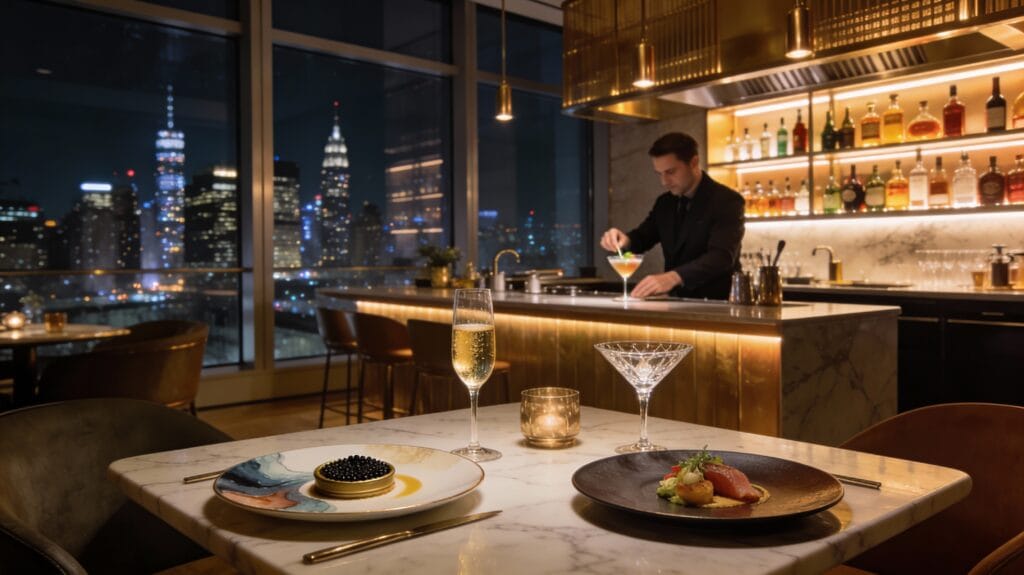
Food may be the star, but any seasoned epicurean knows the setting plays a huge supporting role. The world’s top Michelin restaurants obsess over every detail, including outdoor dining on terraces that feel both private and spectacular. At Restaurant Guy Savoy in Paris, for example, you gaze over the Seine from a discreet, plush enclave.
Great views elevate every bite, whether you’re perched above the ocean or surveying a city skyline ablaze at sunset. On a terrace, the air feels fresher, the food somehow more vibrant—especially when the weather cooperates.
Each space reflects the chef’s vision. Some rooms wrap you in intimacy with soft lighting and tables just close enough for a whispered toast. Others burst with energy, sunlight, and modern design. These atmospheric touches transform dinner into an immersive, sensual experience—one you’ll remember long after dessert.
Special Occasions and Date Night Destinations
Let’s face it: no one does special occasions like a Michelin-starred restaurant. Anniversaries, proposals, milestone birthdays—these venues turn your big moments into cherished memories. Staff anticipate your needs, and every plate arrives with a sense of ceremony.
For date night, nothing sets the mood quite like a starred spot. The hush, the candlelight, the perfect wine—it all encourages conversation and connection. Many chefs love accommodating special touches, from custom menus to flowers. If you want to impress, this is where you do it.
Brunch at a Michelin address offers a playful twist on luxury. Think the same world-class ingredients and technique, but in a more relaxed, sunlit setting. Some places price lunch and brunch more gently than dinner, so you can indulge without splurging (too much).
Culinary Diversity: Cuisines and Styles Recognized by the Michelin Guide
The Michelin Guide doesn’t just celebrate French classics anymore. It spotlights everything from rustic Italian trattorias and precision-perfect Japanese sushi bars to modern fusion and plant-based innovators. You’ll find traditional flavors elevated, inventive menus that surprise, and thoughtful options for every dietary preference.
French, Italian, Japanese, and Classic Cuisines
French cuisine still anchors the Michelin universe, with restaurants that master old-school technique and subtlety. Some lean into tradition, others riff with Mediterranean twists, but all demand respect for their craft.
Italian stars shine for their regional authenticity—think handmade pasta in Emilia-Romagna or Neapolitan pizza straight from a wood-fired oven. Japanese restaurants command their own respect, whether you’re craving omakase, ramen, or a formal kaiseki meal. Michelin-starred restaurants in the United States now rival their European counterparts for diversity and excellence.
Spanish kitchens showcase regional bounty, from Basque seafood to Catalan steakhouses. Elsewhere, you’ll find Thai, Korean, Indian, Middle Eastern, Mexican, Peruvian, and Chinese restaurants earning stars for their passion and precision. Each one proves that mastery knows no borders.
Contemporary, Fusion, and Creative Menus
If you crave the unexpected, contemporary restaurants keep pushing boundaries. Chefs blend global traditions, play with presentation, and chase new flavor combinations—yet always with the technical rigor Michelin demands.
Fusion cuisine gets the nod when it feels intentional, not gimmicky. The best chefs weave multiple traditions into a seamless, exciting whole. Modern kitchens often focus on farm-to-table sourcing and seasonal menus, letting local ingredients shine in ways that feel both familiar and new.
Gastropubs show that luxury isn’t always formal. These spots elevate comfort food with refined technique, serving up sophisticated dishes in cozy, unpretentious settings.
Regional, Vegan, and Dietary Options
True luxury means everyone feels welcome. Michelin has started embracing regional American styles—barbecue joints, delis, and more—when they deliver authenticity and quality.
The Michelin Guide increasingly recognizes underrepresented cuisines and chefs, making the scene more inclusive. Vegan and vegetarian menus no longer play second fiddle; plant-based dining can be just as technically dazzling as any classic tasting menu.
You’ll even find gluten-free, halal, and kosher options at several starred venues. These kitchens prove that dietary restrictions don’t mean compromising on flavor or experience.
Amenities and Services Offered at Top Michelin Star Restaurants
The best Michelin-starred restaurants obsess over details most places overlook. Accessibility, seamless payment, and world-class beverage programs? Absolutely—they’ve thought of everything to make your night effortless.
Wheelchair Access and Family-Friendly Features
Most Michelin-starred restaurants go out of their way to welcome every guest. You’ll see ramps, accessible restrooms, and thoughtfully designed dining spaces.
Valet parking is a given at many city and hotel locations, so you arrive relaxed, not frazzled. Air conditioning and climate-controlled spaces guarantee comfort, especially for those multi-hour tasting menus.
Family policies vary. Some high-end spots welcome children and happily adapt dishes for them. Others keep things strictly adults-only after dark. If you’re planning a family celebration, call ahead to check.
Chef’s counters have become a thing—sit right at the pass and watch the magic happen up close. For food lovers, it’s a must.
Payment Methods and Reservations
Paying is refreshingly easy. Most places accept Visa, Mastercard, American Express, and often Discover, Diners Club, and JCB. Some even process China UnionPay and Maestro, making life simple for international guests.
Booking? Essential. Top Michelin star restaurants around the globe fill up weeks (sometimes months) in advance, especially at the three-star level. Online reservations make the process painless, but don’t be surprised if you’re asked for a deposit or even prepayment to hold your table.
Wine, Sake, and Beverage Programs
Wine service at Michelin restaurants is an art. Sommeliers curate lists with rare vintages, boutique producers, and inspired pairings for every course. You’ll often find sake programs just as deep, especially at Japanese or fusion venues.
A few places let you BYOB (with a corkage fee, naturally). Always check the policy when you book.
If you’re lucky enough to snag a table with a view, savor your glass as the sun dips below the skyline or sea. It’s pure magic.
Non-alcoholic pairings have come a long way, too. Sophisticated juices, teas, and custom drinks now match the complexity of any wine list—ideal for those who want the experience without the buzz.
Finding and Choosing the Best Michelin Guide Experiences Near You
Finding that unforgettable meal isn’t just about luck—it’s about knowing where (and how) to look. The Michelin Guide’s digital tools and strategic booking hacks help you zero in on the perfect spot, whether you crave a splurge or a savvy insider pick.
Using the Michelin Guide and Online Tools
Start with the official MICHELIN Guide website. You can search by city, price, or star level, filtering for starred, Bib Gourmand, or newly added restaurants. It’s surprisingly user-friendly.
The site shows you the nearest restaurants with inspector write-ups, price indicators, and cuisine type. Badges like “Inspectors Favorite” or “Worth Queueing For” help you spot hidden gems.
Thanks to TheFork partnership, you can book many starred restaurants in real time, skipping the awkward phone calls. Apple Maps now displays Michelin distinctions across the U.S.—a game-changer when you’re exploring a new city.
Booking Tips: Reservations, Budget, and Trends
Book early—especially for weekends or special dates. The hottest tables go fast.
Prices range from Bib Gourmand bargains (under $49) to three-star extravagance (sometimes $300+ per person). Lunch service at starred restaurants offers a clever hack: you enjoy the same kitchen for less, and weekday slots are easier to snag.
Keep an eye out for newly starred spots. They’re often easier to book and a bit less expensive—at least until the word gets out.
Maximizing Value: Bib Gourmand and Local Favorites
Bib Gourmand picks are the ultimate value play. You get local flavor and Michelin-approved quality, all without the white tablecloth formality.
Inspectors love to highlight outstanding value and authentic regional cuisine. These spots let you taste the city’s soul without breaking the bank.
Sometimes, it’s more fun to hop between a few Bib Gourmand restaurants than to splurge on one ultra-fancy meal. You’ll experience more variety and, honestly, feel a bit like a local in the know.
Ready to indulge? Book your table now and experience the luxury, artistry, and unforgettable service that only Michelin-starred dining can deliver. If you click our links and make a reservation or purchase, we may earn a commission—thank you for supporting our curated recommendations.
Frequently Asked Questions
The Michelin star system, known for its rigor, awards up to three stars based on ingredients, technique, consistency, and value. Anonymous inspectors visit each year to keep the ratings fresh and fiercely competitive.
How many Michelin stars can a restaurant receive?
A restaurant can earn up to three Michelin stars. The system is refreshingly simple: one star signals great cooking worth a stop, two stars mean it’s worth a detour, and three stars? That’s a destination in itself—truly exceptional, and rare.
The three-star system debuted in 1931 and has barely changed since. Not every restaurant in the Guide gets a star—many simply earn a coveted listing.
What is the criteria for a restaurant to be awarded a Michelin star?
Michelin inspectors judge on five key pillars: ingredient quality, cooking mastery, harmony of flavors, the chef’s unique personality, and consistency over time and across the menu.
Michelin inspectors, all highly trained pros, visit restaurants incognito. They focus on what’s on the plate—not the décor or service—ensuring every star awarded reflects genuine culinary achievement.
Still have questions or want personalized recommendations? Reach out or explore our guides to the world’s most exclusive private dining experiences and strategic luxury villa escapes. Experience the difference that true luxury makes—because you deserve nothing less.
Can a restaurant lose its Michelin star rating, and if so, how?
Absolutely—a restaurant can lose its Michelin stars, sometimes more easily than one might expect. Michelin’s inspectors return year after year, quietly slipping in to sample the food and scrutinize every detail. If a restaurant lets its culinary standards slip, loses its visionary chef, or just can’t maintain that elusive consistency, the stars can vanish—sometimes all at once. It’s a harsh reality, but it’s also what keeps the Michelin distinction so fiercely coveted. After all, only the truly exceptional get to keep their stars. If you’re curious about how Michelin decides, you might find our in-depth guide to Michelin star criteria enlightening.
Are there any 3 Michelin starred restaurants in California?
California boasts a handful of three Michelin-starred gems, each offering a singular, world-class experience. The French Laundry in Yountville, Atelier Crenn in San Francisco, and SingleThread in Healdsburg all hold this rare honor. These aren’t just meals—they’re once-in-a-lifetime journeys through taste, artistry, and impeccable service. Frankly, dining at any of these destinations feels like joining an exclusive club where only the best is good enough. The Bay Area, in particular, has become a global magnet for gourmands seeking the ultimate in culinary prestige. If you want to explore more about California’s luxury dining scene, check out our guide to the state’s best fine dining experiences.
What distinguishes a Michelin star restaurant from other fine dining establishments?
A Michelin-starred restaurant isn’t just another upscale spot—it’s the gold standard for culinary artistry. These establishments don’t just serve food; they elevate every plate to an experience that lingers in your memory. The chefs here obsess over every ingredient, every technique, and every detail. Unlike other fine dining venues that might dazzle you with ambiance or impeccable service, Michelin stars shine a spotlight squarely on what’s on your plate. The flavors, textures, and creativity simply outclass the rest. Even earning a single Michelin star can catapult a restaurant’s reputation into the stratosphere. Wondering how to spot true culinary excellence? Our luxury dining guide reveals what sets these icons apart.
Ready to indulge in the extraordinary? Book your table at a Michelin-starred restaurant and discover why these experiences are truly worth the investment. (Affiliate disclosure: We may earn a commission if you reserve through our links—rest assured, we only recommend the very best.)
FAQ
Why do Michelin stars matter so much?
They’re the most respected symbol of culinary excellence—earning even one means a restaurant ranks among the world’s elite.
How often does Michelin reassess restaurants?
Inspectors visit annually, and sometimes more often, to ensure standards stay sky-high.
Is dining at a Michelin-starred restaurant really worth the price?
Yes—think of it as an investment in an unforgettable experience. The quality, creativity, and attention to detail are simply unmatched.
Can a restaurant regain a lost star?
Absolutely, but it takes relentless dedication to quality and innovation. Some legendary chefs have staged remarkable comebacks.
How often does the Michelin Guide update its restaurant ratings?
If you’re passionate about the world’s finest dining, you probably know that the Michelin Guide refreshes its coveted restaurant ratings every year in most regions. Their secretive inspectors—true connoisseurs—slip into restaurants again and again throughout the year, scrutinizing every detail to ensure each establishment truly earns its stars. Only after they’ve dined extensively do they decide if a restaurant deserves a rating change.
Interestingly, the schedule isn’t set in stone everywhere. Some cities and countries see their new guides unveiled at different times throughout the year, adding an element of anticipation for both restaurateurs and discerning diners. Michelin’s experts constantly reassess restaurants, making sure standards don’t slip. They might reward a dazzling newcomer with a first star, or—sometimes painfully—remove one from a place that’s lost its touch. It’s all about maintaining that rarefied standard of excellence.
If you’re seeking the ultimate in culinary indulgence, we recommend exploring our curated list of Michelin-starred restaurants worth traveling for or discover unique luxury dining experiences. These experiences are more than just meals—they’re memories, and absolutely worth the investment for those who crave the extraordinary.
Ready to book your next unforgettable meal? Don’t wait—secure your reservation at one of these world-class destinations today. Book your exclusive table now. Affiliate disclosure: Some links in this article may earn us a commission, at no extra cost to you. We only recommend experiences we believe are truly exceptional.
FAQ
How do I know when the latest Michelin Guide is released in my city?
Keep an eye on the official Michelin Guide website or sign up for their newsletter. Many luxury travel sites also announce release dates for major cities.
Is dining at a Michelin-starred restaurant really worth the price?
Absolutely. Michelin-starred restaurants offer unparalleled quality, creativity, and service. You’re not just paying for a meal—you’re investing in an unforgettable experience.
Can restaurants lose their stars?
Yes, Michelin inspectors regularly re-evaluate restaurants. If a venue doesn’t maintain its standards, it can lose its star. This relentless pursuit of excellence is what keeps the guide so prestigious.
Want to explore more?
Check out our guide to luxury hotels with Michelin-starred dining.