
Villiers private jet charter is reshaping how serious travelers think about private aviation, turning what used to be a guarded, opaque world into something you can actually understand, compare, and book with confidence. From the outside, that sounds like marketing—but when you follow a real trip from idea to touchdown, the difference becomes very tangible.
Picture this: it’s Wednesday night in London, and a founder called Alex is staring at two calendars—his own and his investor’s in Berlin. The only commercial option that gets him there in time for a crucial breakfast meeting involves a 4:45 a.m. alarm, a connection, and the real prospect of walking into the room already exhausted. A friend sends him a link to Villiers and says, “Just get a quote and see.” What happens next is the story this guide is really about.
How Villiers Was Built to Fix a Fragmented Industry
When Villiers was founded in 2013, private aviation still worked like an insiders’ phone tree. You called “a guy,” who called three more people, who sent you PDFs with prices that didn’t quite line up—and you were expected to sign and wire funds without ever seeing the full picture.
Villiers was created to fix one fundamental problem: the market was highly fragmented and hard to see. Thousands of operators, each with their own fleets, safety standards, and pricing models, existed in silos. There was no single, central place where a traveler like Alex could:
- See real aircraft options side by side
- Understand why one quote was higher than another
- Know exactly which operator and aircraft he was stepping onto
Founder’s ambition was simple and radical at the same time: build a single platform where clients could access the full global market, receive competitive quotes quickly, and finally understand what they were booking and why it was priced that way.
Today, the Villiers mission hasn’t drifted. In an era where luxury travelers can book a five‑star hotel or a Michelin‑starred restaurant from their phone in seconds, Villiers aims to bring that same clarity and responsiveness to private jets: straightforward pricing, genuine availability, and humans on call 24/7 to make sure everything runs as planned.
What sets them apart from the old-school broker model is not a louder brand but a different stance: transparency and independence. They aren’t aligned with a particular fleet owner or locked into pushing a small set of aircraft. Recommendations are made on merit, not convenience—which, in practice, means showing clients the option that fits the mission, not the one that happens to be easiest to sell that day.
Inside the Villiers Booking Experience (Through a First-Timer’s Eyes)
When Alex clicks through to request a quote, he isn’t asked to decode aircraft types or industry jargon. The platform is built around the questions a first‑time passenger actually has:
- Where are you going from and to?
- On what dates?
- How many people?
He fills in London to Berlin, early-morning outbound, afternoon return, four passengers. Within a short window, the replies start coming back—not as vague “from” prices, but as real quotes from real operators, each showing:
- The aircraft type
- The operator’s name
- The full pricing, including the elements that usually hide in the fine print
For first-time clients, that initial moment is often the biggest surprise: instead of an opaque back-and-forth, it becomes a tangible conversation. If Alex wants someone to walk him through the difference between, say, a light jet and a turboprop, there’s a real person available at any hour—because travel doesn’t keep office hours, and neither does Villiers.
Behind the scenes, the system is doing something the old Rolodex broker never could: it’s reaching into a global, verified network of operators in real time. Aircraft availability isn’t a static spreadsheet; it changes constantly as jets reposition, new empty legs appear, and itineraries shift. Villiers connects into that live picture, which means the options Alex sees actually exist for his dates instead of being rough estimates that may or may not pan out.
Empty-Leg Flights: The Insider Shortcut That Isn’t Just for Insiders
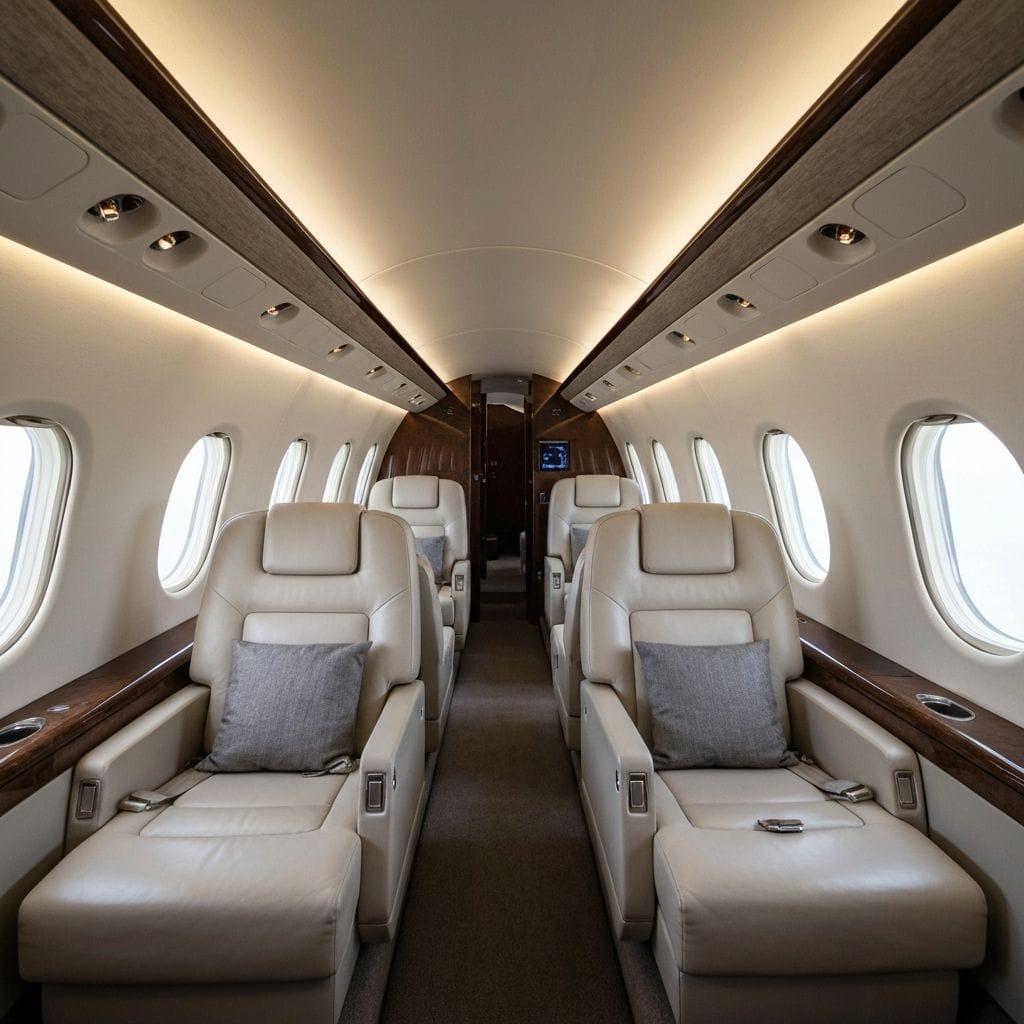
On Friday, Alex’s Berlin meeting goes better than expected. Buoyed by that, he starts thinking about taking his parents to the Riviera for his mother’s 70th. The idea of a private jet feels like something from their favorite movies—out of reach. Then the Villiers rep mentions two words that change the math: empty legs.
An empty leg happens when a jet has to fly without passengers—maybe to return to its base after dropping off a client, or to position itself for its next booked flight. That repositioning flight is happening whether anyone is on board or not, which means:
- The operator has already committed to covering that sector
- Selling it at a significant discount is still better than flying completely empty
Villiers lists these empty legs in real time across Europe, North America, Asia, and beyond. For flexible travelers, they represent some of the best value in private aviation—often at a fraction of standard charter cost. The trade‑off is non‑negotiable: routes and dates are fixed. It’s a “this jet is going here at this time” scenario.
For Alex’s family trip, the stars align: there’s an empty leg from London to Nice on the exact Friday he had in mind. Instead of reshuffling his mission to fit the plane, he discovers a plane that already fits his mission—something you simply don’t see when you’re stuck in commercial booking funnels.
What Real Customisation Looks Like in Practice
Private charter has always marketed itself as “personal,” but the reality often came down to whether someone remembered your name and your drink order. Villiers leans into a deeper, more operational definition of customisation.
Clients regularly come with requests that are anything but standard:
- Catering that mirrors a client’s preferred restaurant, down to specific dishes
- Onboard connectivity that must be robust enough for live investor calls
- Ground transport at both ends that has to sync precisely with board meetings or yacht departures
- Flights to airports that require special permits or advanced security coordination
Villiers’ team handles those pieces as part of the same conversation, not as scattered side quests. When Alex bookends his Riviera empty leg with a return flight booked closer to normal rates, the team quietly lines up:
- A car waiting planeside on arrival
- A specific birthday cake on board with his mother’s favorite flavor
- Catering on the return leg that’s lighter and more “post‑weekend” than champagne‑heavy
The promise isn’t perfection for its own sake; it’s that the level of service stays the same whether you’re rearranging a flight at midnight or planning a multi‑leg itinerary months ahead.
Who’s Actually Flying Private Now? (It’s Not Who You Think)

The cliché image of private aviation—a billionaire CEO commuting between glass towers—still exists, but it’s no longer the whole picture. Villiers sees a client mix that looks more like the real modern luxury traveler:
- Families booking a milestone trip: a big birthday, a reunion, or a last celebration before kids scatter to universities in different countries
- Groups of friends combining budgets for a wedding in an out‑of‑the‑way destination
- First‑time flyers in their 30s and 40s who have built successful businesses or portfolios and want to see whether private travel actually changes how a trip feels
Private aviation is still a premium decision, but the profile has broadened. Increasingly, people aren’t flying private “just because” they can; they’re doing it when it solves very specific problems: too many connections, too far from a major hub, too little time.
On the trend front, a few shifts are especially visible:
- Shorter, more frequent trips as flexible work lets people travel mid‑week and blend work with leisure
- A focus on the experience of getting there, not just the villa or hotel waiting at the other end
- A serious conversation around sustainability, not brushed aside as an afterthought
- Tech‑driven expectations: if you can book a five‑figure villa from your phone at 11 p.m., you expect your jet options to load just as quickly
High‑net‑worth travelers now treat responsiveness, clarity, and personalisation as table stakes. Villiers has built its platform to meet that standard, not as a “nice to have,” but as the minimum to be taken seriously.
Safety, Compliance, and Why the Boring Part Matters Most
In private aviation, the most important things are invisible when everything goes right. Villiers is blunt about this: safety is the only non‑negotiable metric.
Every operator in their network is verified against the requirements of the relevant aviation authority—FAA, EASA, or equivalent. That means:
- A valid Air Operator Certificate (AOC) for commercial operations
- Proper, up‑to‑date insurance
- Demonstrable adherence to regional safety standards
They do not work with operators who fall outside those frameworks. Full stop.
On top of regulatory checks, Villiers looks to independent audits like ARGUS Platinum or Wyvern Wingman where available—markers that an operator goes beyond the bare minimum. For clients, this should translate into a simple expectation: any aircraft presented as an option sits firmly within robust safety systems.
For someone choosing a provider, Villiers suggests a few hard questions:
- Can they tell you, clearly and without hesitation, who the operator is, what aircraft you’re flying, and what’s included in the price?
- Do they provide verifiable proof of aircraft and crew certification?
- Is there a clear plan for what happens if something changes—weather, maintenance, crew duty times?
If any of those points are fuzzy, that fuzziness is the red flag.
How Villiers Works With Creators, Affiliates, and Luxury Brands
If you found Villiers through a blog, a YouTube review, or a newsletter, that’s not an accident. The company’s growth has been powered in large part by its affiliate programme.
Instead of relying solely on direct advertising, Villiers partners with:
- Content creators
- Travel bloggers
- Luxury lifestyle platforms
- Brands and media that already speak to an audience curious about private travel
Partners receive their own referral link and earn commission on every booking that comes through their audience. Given the transaction values involved in private aviation, those commissions are meaningful. The programme includes a dashboard to track:
- Clicks and traffic
- Conversions
- Earnings in real time
The barrier to entry is deliberately low. If you run a blog, social channel, newsletter, or podcast with a readership interested in luxury, travel, or high‑end lifestyle, you can apply. Once approved, you integrate that personal referral link—like the one used on Syvix—and Villiers backs it up with materials, imagery, and support so the integration feels natural to your platform rather than bolted on.
Facing Sustainability Honestly

There’s no way to talk about private aviation without acknowledging its carbon footprint, and Villiers refuses to pretend otherwise. They are clear: private jets have a meaningful environmental impact, and it would be dishonest to minimize that.
For clients who care—which, increasingly, is most of them—this means the decision is conscious. You can choose to:
- Fund high‑quality offset projects
- Prefer operators or aircraft that make use of SAF where possible
- Make routing choices that are efficient rather than extravagant
Villiers is also watching the frontier: hybrid and electric aircraft projects, improvements in SAF production and distribution, and the regulatory frameworks that will eventually follow. The next decade will almost certainly drag private aviation into a more sustainable posture, and Villiers wants to be part of that shift rather than reacting to it late.
Innovation and Features on the Horizon
Under the hood, Villiers is investing heavily in making the experience feel as natural for newcomers as it already does for veterans. Two areas are getting particular attention:
- First‑time charter clients – Demystifying the process so booking a private jet feels as intuitive as booking any high‑end service. Clear steps, transparent quotes, and human support at every point.
- Empty‑leg accessibility – Turning what was once an insider’s trick into something anyone can act on. Better discovery, real‑time updates, and easier booking flows so travelers can spot a great empty leg and move quickly before someone else takes it.
The broader ambition is consistency: to make private aviation more accessible to a wider range of travelers without diluting what makes it exceptional—privacy, speed, and service.
The Bookings They Remember (And Why They Matter)
Ask Villiers for the most memorable flight they’ve arranged and you won’t get the longest route or the largest jet. The stories that surface are quieter, but sharper:
- A passenger who had to be in two cities in the same day for a time‑critical matter where missing either event simply wasn’t an option
- A family pulling off a surprise gathering that would have been impossible with commercial schedules
- A client who had never flown privately, who came back and said the experience completely changed how they thought about travel
These stories stick because they illustrate what private charter is actually for. It’s not just about more legroom or champagne; it’s about time, coordination, and control at moments when they matter more than usual.
For someone considering private aviation for the first time, Villiers’ advice is pragmatic: don’t evaluate it in the abstract. Start with a specific journey:
- A route you travel several times a year
- A trip where commercial options are so convoluted you arrive wrecked
- A group itinerary where you’re already buying four or six premium tickets
Get a quote for that exact journey and compare. Many first‑time clients are surprised to discover that, on certain routes, once you factor in connections, hotels, lost hours, and multiple tickets, private charter isn’t as far from commercial first-class pricing as they assumed.
Where Villiers and Private Aviation Go Next
Looking ahead, Villiers sees its own roadmap and the broader industry’s evolution as tightly connected.
On their side, the focus is on:
- Deepening the operator network in regions where demand is surging
- Delivering faster, richer quotes with more real-time detail
- Building better tools for clients who want to manage travel more actively, including frequent flyers and corporate teams
- Strengthening affiliate and partner ecosystems so that discovery flows naturally through the platforms travelers already trust
For private aviation as a whole, the next 5–10 years are likely to be defined by four shifts:
- Accessibility – The gap between commercial first class and private charter will narrow on certain routes as inventory expands and tech squeezes inefficiencies out of the system.
- Transparency – Opaque pricing and mystery operators are on the way out; clients will expect data-rich, line‑item clarity.
- Sustainability – SAF, better offsets, and eventually new propulsion technologies will move from “optional extras” to default expectations.
- Broader clientele – The stereotypical “private jet person” will become less relevant as more types of travelers—entrepreneurs, families, creative professionals—use charter for specific missions rather than as a lifestyle badge.
Villiers is building for that world: more accessible, more honest, and more tightly aligned with how people actually want to move through it.
Bringing It Back to Your Next Trip
For Alex, what started as a single early‑morning dilemma turned into a new mental model for travel. He still flies commercial when it makes sense. But when the stakes are high, or when the itinerary is clearly hostile to standard schedules, he now knows he has another play.
That’s the quiet revolution Villiers private jet charter is pushing forward: not replacing commercial aviation, but giving serious travelers a strategic tool—a way to buy back time, protect privacy, and shape travel around life rather than the other way around.
If you’re curious where that might fit into your own plans, the simplest next step is also the most honest one: pick a real journey, get a real quote, and see how the numbers and the experience actually compare.
Learn more or request a private jet charter:
Villiers Aviation