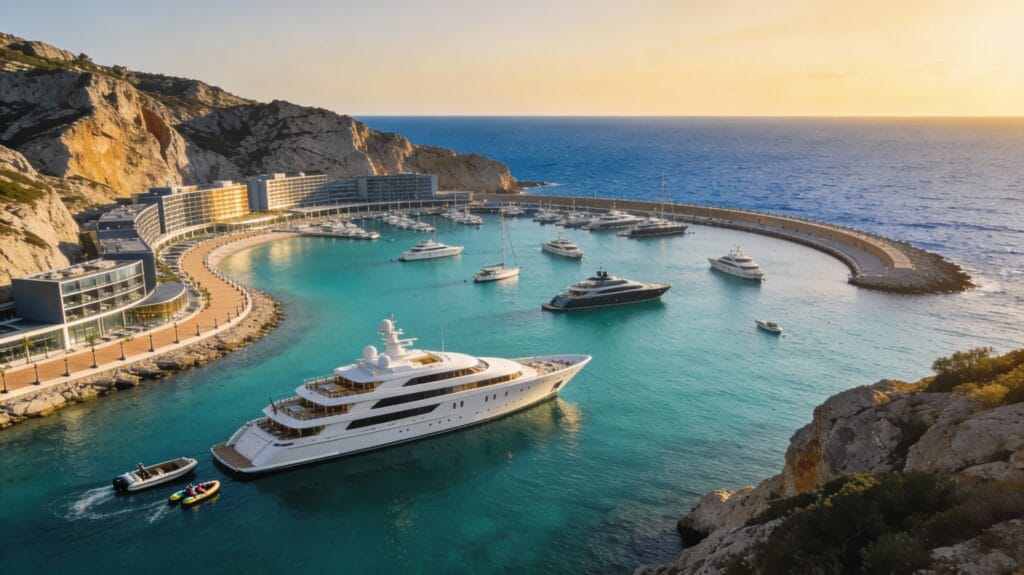
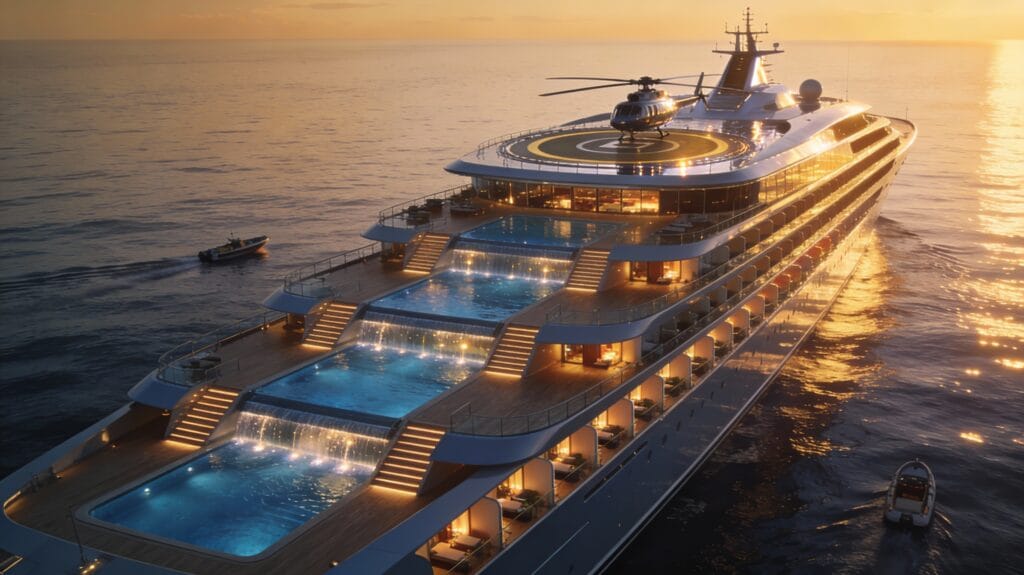
The Superyachts Redrawing the 2026 Top 100 are bigger in volume, quieter at anchor, and more technically complex than any generation before them. Instead of chasing length alone, the latest 80‑meter‑plus projects are focusing on hybrid propulsion, hotel‑load efficiency, and increasingly private owner spaces that turn these yachts into floating members’ clubs. Northern European builders still dominate the very top of the table, but Mediterranean and US projects are quietly climbing the rankings with bold beach‑club designs and alternative power systems.
New giants entering the 2026 Top 100
Several headline deliveries are defining the superyachts redrawing the 2026 Top 100 list. Record‑breaking projects like REV Ocean and Amels’ Project Tanzanite push well beyond 100 meters, adding scientific research or expedition capability to the usual private‑yacht brief. Other new builds from Feadship, Lürssen, and Spanish yards bring eye‑catching profiles, six or more decks, and gross tonnages that rival boutique cruise ships while still being run as private assets.
Yet the real shift is not just size but how that volume is used. Owners are asking designers to carve out entire private decks, concealed terraces, and multi‑level beach clubs that allow family and close friends to move around without ever crossing public or guest areas. These private worlds are supported by dedicated wellness decks, sea‑level lounges, and even small marinas for tenders and toys, so a month on board can feel like circulating through a resort rather than repeating the same few spaces.
Hybrid propulsion and quiet power
Sustainability pressure and tighter regulations mean that many of the superyachts redrawing the 2026 Top 100 have hybrid propulsion baked into the specification from day one. Builders are pairing efficient diesel engines with battery banks, electric drives, and energy‑management software that can cut fuel burn and emissions by meaningful margins on long passages. Flagship projects from European yards now routinely offer battery‑assisted “silent modes” for running hotel loads at anchor without firing up generators, reducing vibration and letting guests enjoy bays in near‑total quiet.
Experimental concepts push even further, with fuel‑cell systems and large‑scale battery arrays promising near‑fossil‑fuel‑free operation for certain profiles. While pure‑electric transoceanic cruising remains a future ambition, hybrid megayachts delivered in 2026 show that owners will now trade some technical risk for the ability to enter sensitive areas more cleanly and to market their projects as genuinely forward‑looking.
Design language: glass, terraces, and beach clubs
Visually, the superyachts redrawing the 2026 Top 100 share a new design language built around glass and terraces. Long bands of floor‑to‑ceiling glazing, curved superstructures, and cut‑outs in bulwarks bring light deep into interior lounges while preserving clean exterior lines. Many yachts add fold‑down platforms at the stern and midships that expand beam at anchor, creating over‑water terraces where guests can dine or lounge only a few centimeters above the sea.
Beach‑club areas are now multi‑room complexes rather than simple stern platforms. New builds integrate pools at the transom, glass‑fronted gyms, massage rooms, and sea‑level bars into one continuous wellness zone, served by stairs and elevators from guest cabins above. On some concepts, designers even route tender traffic away from the main beach‑club terrace to keep noise and movement out of the calmest part of the ship.
Toys, tenders, and smarter hotel systems
Even as owners focus on efficiency, the superyachts redrawing the 2026 Top 100 still carry serious hardware in their garages. Limousine tenders are getting larger and more refined, with enclosed cabins, stabilisation, and hybrid drives of their own to keep transfers comfortable in all weather. Chase boats, RIBs, and compact submarines round out toy lists so guests can dive, fish, foil, and explore in rotation over multi‑week itineraries without repeating the same experience.
Behind the scenes, “smart” hotel systems manage everything from lighting and HVAC to galley loads. Advanced energy‑management platforms smooth demand spikes, route power from batteries when it is most efficient, and give engineers real‑time data on how guests actually use the yacht. For owners and charterers, the result is simple: quieter cabins, fewer visible generators, and longer stretches at anchor in remote bays without compromising comfort.
What this means for buyers and charterers
For buyers, the superyachts redrawing the 2026 Top 100 confirm that hybrid propulsion, wellness‑centric layouts, and outsized beach clubs are no longer niche options but expected features at the very top of the market. Brokerage lists now highlight battery capacity, silent‑running hours, and fuel‑cell readiness alongside gross tonnage and range. For charter guests, these same trends translate into quieter nights, more privacy, and itineraries that can include protected or remote destinations with a lighter environmental footprint.
If you already track the Top 100 rankings, 2026 is the year to watch how these new deliveries shuffle the order, especially as hybrids and research‑driven projects claim places traditionally reserved for pure leisure yachts. Linking this article to your main “Top 100 superyachts” and “hybrid yacht technology” guides will help visitors move deeper into your coverage while signalling to search engines that your site owns this topic cluster.