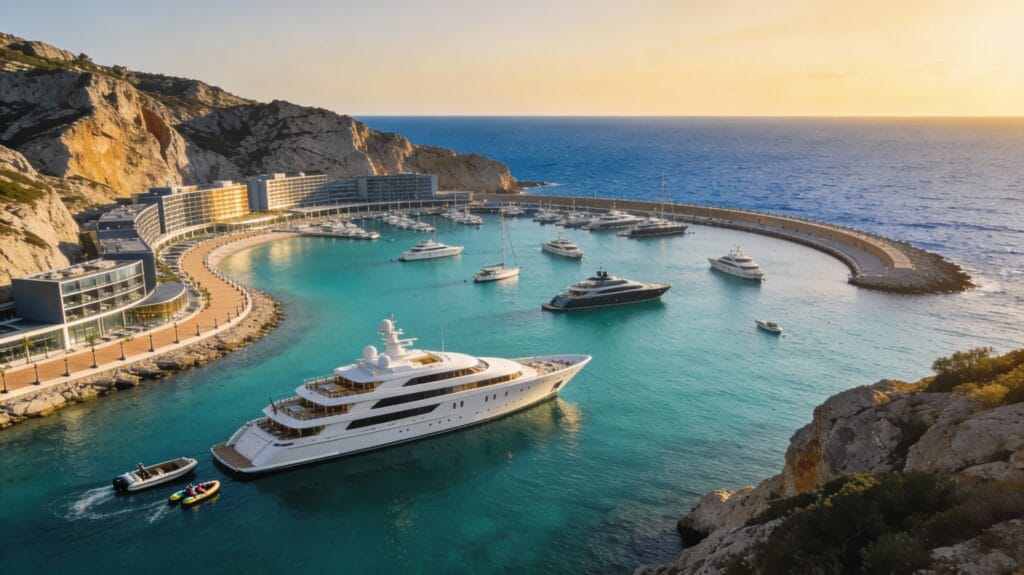
The Rise of Explorer Yachts industry has undergone a fundamental transformation over the past decade, with an increasing emphasis on privacy, safety, and bespoke travel driving high-net-worth individuals toward yachting as the ultimate way to explore breathtaking destinations. In 2026, the most significant trend reshaping the superyacht market is the pivot from traditional Mediterranean glamour to rugged, go-anywhere explorer vessels capable of reaching the world’s most remote destinations.
From Status Symbols to Expedition Vessels
Traditional superyachts were designed for short Mediterranean cruises, docking at glamorous ports where owners could see and be seen. These vessels prioritized aesthetics over capabilities, with shallow drafts limiting where they could travel and minimal fuel capacity restricting range. But today’s ultra-wealthy buyers want something fundamentally different: the ability to reach Antarctica, cruise remote Pacific islands, or explore the Norwegian fjords without relying on shore infrastructure.
Explorer yachts address these desires with ice-strengthened hulls, extended fuel capacity enabling transoceanic voyages, helicopter decks for remote excursions, and expedition equipment including submarines, tenders designed for polar conditions, and gear for diving, fishing, and wilderness exploration. These vessels sacrifice some interior volume for capabilities, but owners gladly accept the trade-off for genuine go-anywhere freedom.
The Appeal of True Privacy
Global events over recent years accelerated the shift toward yachting as the ultimate private escape. When commercial travel became complicated and luxury resorts couldn’t guarantee exclusivity, yachts offered complete control over your environment, guest list, and itinerary. This trend shows no signs of reversing—privacy has become the ultimate luxury for ultra-high-net-worth individuals.
Explorer yachts take privacy to its logical conclusion. Rather than anchoring off St. Tropez alongside dozens of other superyachts, owners can position themselves off uninhabited islands, remote coves, or polar regions where they’re genuinely alone. The ability to disappear completely, unreachable except by satellite communication, represents freedom that even the most exclusive resort cannot provide.
Remote Work Meets Remote Waters
The rise of remote work has transformed how wealthy individuals approach their time. When business can be conducted from anywhere with reliable satellite internet, the distinction between “working” and “vacationing” blurs. Explorer yachts equipped with Starlink and sophisticated communications systems enable owners to maintain business operations while positioned thousands of miles from the nearest city.
This creates extended expedition opportunities that weren’t practical when owners needed to return to offices regularly. A three-month voyage through the South Pacific becomes viable when you can participate in board meetings via video conference and monitor investments in real-time. The yacht becomes a floating office, home, and adventure base simultaneously.
Experiential Travel Over Conspicuous Consumption
Younger ultra-wealthy individuals, particularly tech entrepreneurs and cryptocurrency millionaires, prioritize experiences over traditional status symbols. They’re less interested in impressing other yacht owners in Cannes and more focused on diving with whale sharks in remote Pacific atolls, observing polar bears in Svalbard, or exploring archaeological sites accessible only by sea.
This shift in values drives explorer yacht demand. These buyers want vessels enabling extraordinary experiences rather than floating palaces for hosting parties. They’ll sacrifice a formal dining room for additional toy storage. They’ll accept a more utilitarian aesthetic if it means better offshore capabilities. The yacht becomes a tool for creating memories rather than an object for display.
Sustainability Concerns Influence Design
Environmental consciousness is growing among yacht owners, particularly younger ones who’ll own vessels for decades. While superyachts will never be truly eco-friendly, explorer yachts can incorporate sustainability features more readily than traditional vessels. Hybrid propulsion systems reduce fuel consumption and emissions. Solar panels and advanced battery systems enable quiet, emission-free anchoring without running generators. Desalination and waste management systems minimize environmental impact in pristine locations.
These features aren’t just about feeling better—they’re practical. Explorer yachts visiting sensitive environments like Antarctica face strict environmental regulations. Vessels not meeting these standards can’t access these destinations. As more remote locations implement environmental protections, explorer yachts designed with sustainability in mind will have access others don’t.
The Market Responds
Shipyards are responding to explorer yacht demand with new designs prioritizing capability over traditional superyacht aesthetics. We’re seeing ice-class hulls, extended range capabilities, and expedition-focused layouts become mainstream rather than niche offerings. Some traditional motor yacht builders have launched explorer divisions, while specialist yards focusing exclusively on expedition vessels are experiencing years-long backlogs.
The secondhand market reflects this shift as well. Traditional superyachts, particularly older vessels with limited range and capabilities, are seeing slower sales and declining values. Meanwhile, well-maintained explorer yachts command premium prices and sell quickly when they come to market. This value retention makes explorer yachts increasingly attractive as investments, not just toys.
What Buyers Are Requesting
Today’s explorer yacht buyers specify equipment that would have seemed absurd on traditional superyachts. Helicopter decks are now expected rather than exceptional. Tenders aren’t just for ferrying guests to shore—they’re expedition-grade RIBs capable of handling serious offshore conditions. Toy garages expand to accommodate jet skis, diving gear, fishing equipment, kayaks, paddleboards, and increasingly, submersibles for underwater exploration.
Owners also prioritize self-sufficiency. Extended cold storage for provisions, watermakers producing thousands of gallons daily, and medical facilities enabling extended periods without shore access are becoming standard on larger explorer yachts. The goal is spending months in remote locations without requiring reprovisioning stops.
The Crew Consideration
Explorer yachting requires different crew expertise than traditional yachting. Captains need offshore voyage experience and skills in challenging conditions. Engineers must maintain complex systems without immediate access to shore support. Deckhands should be comfortable with expedition equipment and potentially have dive certifications. Some owners even employ expedition leaders—professionals who’ve guided polar expeditions or scientific research voyages—to ensure safe, meaningful experiences in remote environments.
This specialized crew requirement affects operating costs. Explorer yacht crew command premium salaries due to their expertise, and owners must invest in ongoing training for cold-water operations, emergency protocols, and environmental compliance. However, owners serious about exploration consider these costs essential rather than optional.
The Future of Luxury Yachting
The explorer yacht trend isn’t a temporary fascination—it represents a fundamental shift in how ultra-wealthy individuals conceive of yachting. The next generation of yacht owners values capabilities, experiences, and privacy over traditional status signaling. They want vessels enabling genuine adventure rather than floating event spaces for entertaining.
This doesn’t mean traditional superyachts will disappear. There remains a market for glamorous vessels optimized for Mediterranean summers and Caribbean winters. But the most dynamic growth, the most enthusiastic buyers, and the most innovative designs are in the explorer segment. Shipyards, designers, and brokers who understand this shift will thrive; those clinging to traditional superyacht concepts will struggle.
For the ultra-wealthy contemplating a yacht purchase in 2026, the question is clear: do you want a vessel that impresses other yacht owners, or one that enables you to explore places those other owners can never reach? Increasingly, the answer is exploration over exhibition, capability over glamour, and genuine adventure over predictable luxury. The rise of explorer yachts isn’t just a trend—it’s the future of luxury yachting.